Creating a comfortable, beautiful home that costs less to run is easier than you might think. Energy-efficient homes combine smart design, efficient technology, and upgraded materials to reduce everyday energy use. Whether you’re planning a total remodel or making gradual improvements, focus on energy-efficient home designs to save money and enjoy a healthier, more comfortable interior all year-round.
Benefits of Energy-Efficient Remodeling
When you make energy-efficient home improvements, the benefits go beyond monetary savings. Here’s what you stand to gain:
- Lower energy bills: Your biggest motivation might be to cut down on how often your heating and cooling system runs, thereby lowering your utility bills. Well, that’s exactly what happens when you upgrade the insulation, improve air sealing, or install more efficient windows and doors during a home renovation.
- Greater comfort: Drafty rooms, cold floors, and uneven temperatures make your home less comfortable. Improvements that reduce winter heat loss and summer heat gain lead to more consistent indoor temperatures and a more enjoyable living environment.
- Increased home value: Buyers appreciate efficient, well-designed homes. Features like modern windows, high-quality insulation, and energy-efficient appliances make your home more attractive on the market and may allow you to increase your asking price.
- Environmental benefits: Using less energy reduces your home’s carbon footprint. Even small improvements curb energy waste and conserve natural resources.
- Long-term savings and stability: Some improvements require an upfront investment but pay for themselves gradually through lower utility bills and fewer repairs. Energy-efficient appliances, HVAC systems, and lighting also perform better for longer, delaying the need for replacement.
- Protection against rising energy costs: Energy prices tend to increase over time, but efficient upgrades reduce the energy your home uses, providing greater control and stability when rates go up.
Energy-Efficient Remodeling Ideas
A remodel is the perfect opportunity to upgrade your home’s efficiency as well as its appearance. These ideas reduce energy waste and improve everyday performance:
- Tighten the exterior envelope: If you’re already planning work that involves opening the walls or ceilings, add insulation at the same time to help your home hold conditioned air more effectively. Pair that insulation with careful air sealing around windows, doors, plumbing, and vents to create a tight home envelope that supports long-lasting efficiency.
- Replace old windows and doors: Upgrading to double-pane windows with low-e coatings or gas in-fills reduces heat transfer and uncomfortable drafts. If new windows aren’t in the budget, adding storm windows and doors similarly improves insulation and lowers energy use.
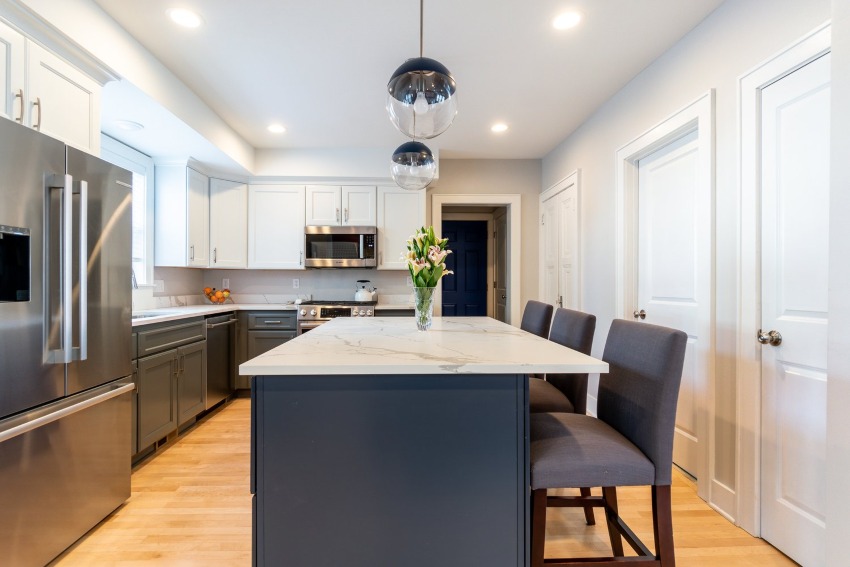
- Install energy-efficient appliances and fixtures: Kitchens and laundry rooms benefit greatly from appliance upgrades. High-efficiency refrigerators, dishwashers, washing machines, dryers, and water heaters greatly reduce electricity, natural gas, and hot water consumption. Pair these with LED lighting and efficient plumbing fixtures for a home that consumes less power and water without sacrificing comfort or convenience.
- Upgrade your HVAC system: Replacing an outdated furnace, boiler, or air-conditioner with a high-efficiency unit improves performance and lowers operating costs. Heat pumps are especially popular for their ability to use less energy while providing consistent comfort.
- Use smart home energy management: Run your home on autopilot with a smart thermostat, automated lighting, and efficient HVAC controls. These systems adjust energy use based on your schedule and comfort level to reduce waste with zero effort on your part.
- Maximize natural light: During your remodel, consider changes that reduce the need for artificial lighting during the day, such as larger windows, skylights, and improved room layouts.
Budget-Friendly Tips
Energy-efficient home improvements don’t have to break your budget. Even modest improvements can make a noticeable difference. Here’s what to try:
- Weatherstrip and caulk windows and doors: If your windows and doors don’t warrant replacement, you can still improve performance with a bit of weatherstripping and caulk.
- Use window coverings or films to your advantage: Heat gain and heat loss often occur through windows. Install insulated curtains, reflective blinds, and window films to regulate indoor temperatures and support your efficiency goals.
- Swap out traditional bulbs for LEDs: LED bulbs last far longer and use a fraction of the energy of incandescent lights. Upgrading the bulbs throughout your home is an easy way to improve efficiency and reduce electricity costs.
- Replace inefficient appliances gradually: When an appliance reaches the end of its life, use the opportunity to upgrade to a more efficient model. This incremental approach spreads out costs and steadily improves your home’s energy performance.
Common Mistakes to Avoid
Even with the best intentions, some remodeling efforts can fall short. Avoid these common mistakes when implementing energy-efficient home designs:
- Adding insulation without air sealing first: Insulation slows heat transfer, but it can’t stop air movement. Sealing first prevents uncomfortable drafts and helps the insulation perform at its intended R-value.
- Replacing windows unnecessarily: While new windows can make a big difference, replacing every window in the house is expensive. If you already have double-pane windows, extend their lifespan with improved weatherstripping or storm windows.
- Focusing only on small improvements: Switching to LED bulbs is helpful, but ignoring major issues like an aging HVAC system or water heater limits your progress. Larger components tend to deliver the biggest efficiency gains, especially if the equipment is well past its prime.
- Choosing appliances based on upfront price alone: Cheaper appliances may cost less at checkout, but they consume more energy every day. Energy-efficient appliances reduce operating costs and typically last years longer, making them a smarter investment.
- Throwing improvements together haphazardly: Piecemeal upgrades without a strategy can result in mismatched systems and wasted effort. Coordinate with your remodeler to ensure improvements work together to support an energy-efficient home.
Time to Make Your Home Work Smarter
If you’re planning a home remodel in the Milwaukee Metro Area, let Kelmann Homes help you maximize performance and efficiency. Our family-owned, locally operated company brings passion and precision to every project. Over the past 50 years, we have grown from a small restoration firm into a full-service remodeling and redesign team, so we understand the value of honest service and high-quality workmanship. If you’re ready to enjoy energy-efficient home improvements that boost comfort, save money, and add long-term value, please contact us today to discuss your design ideas.